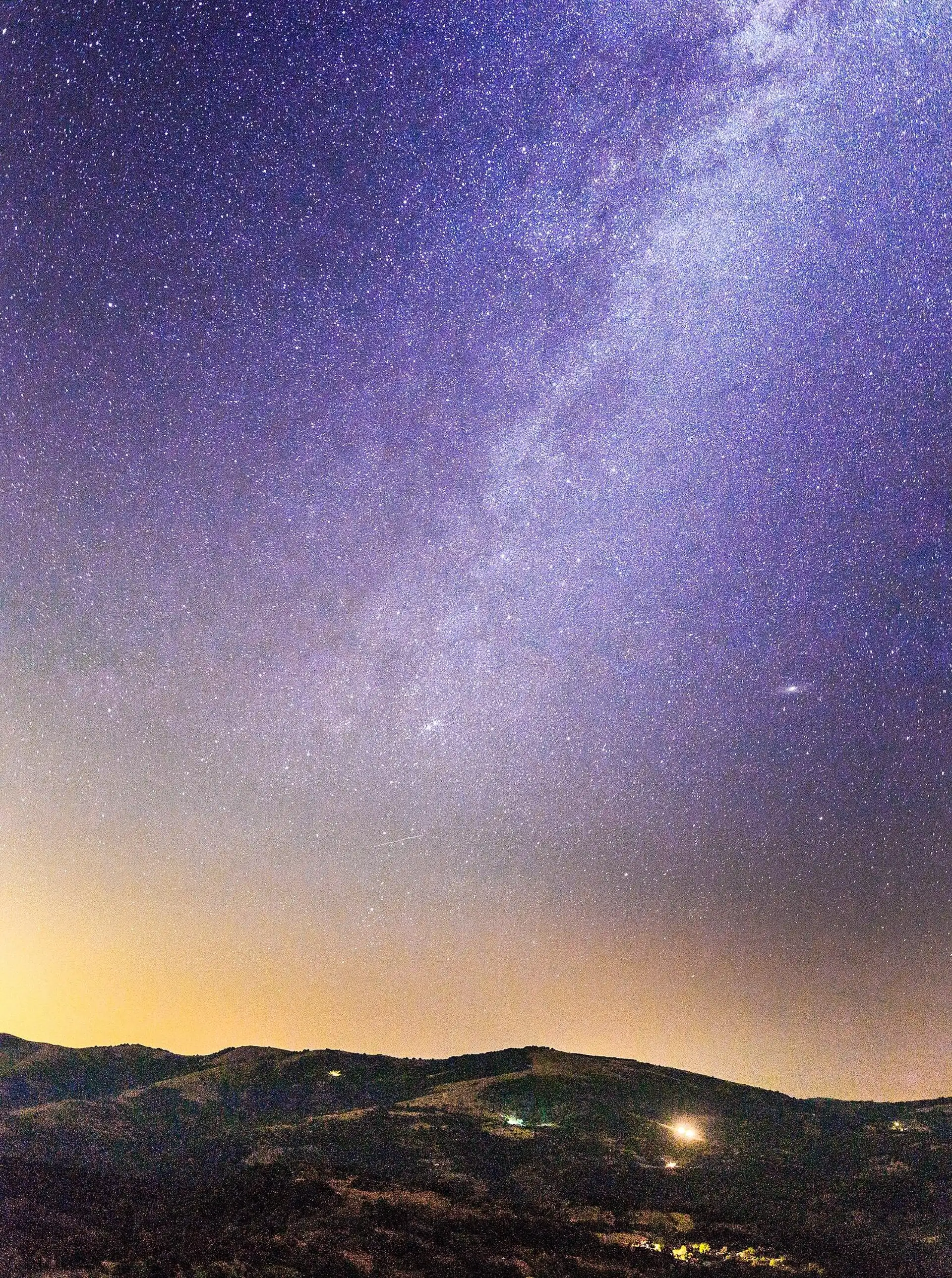
Tatichev Kamen · North Macedonia
Where the Bronze Age
learned to read the sky
Nearly four thousand years ago, people climbed this volcanic ridge to watch the sun and moon rise through notches cut in the rock — and built a calendar out of what they saw. Kokino is still here, and it still works.
What Kokino is
An observatory carved into a volcano
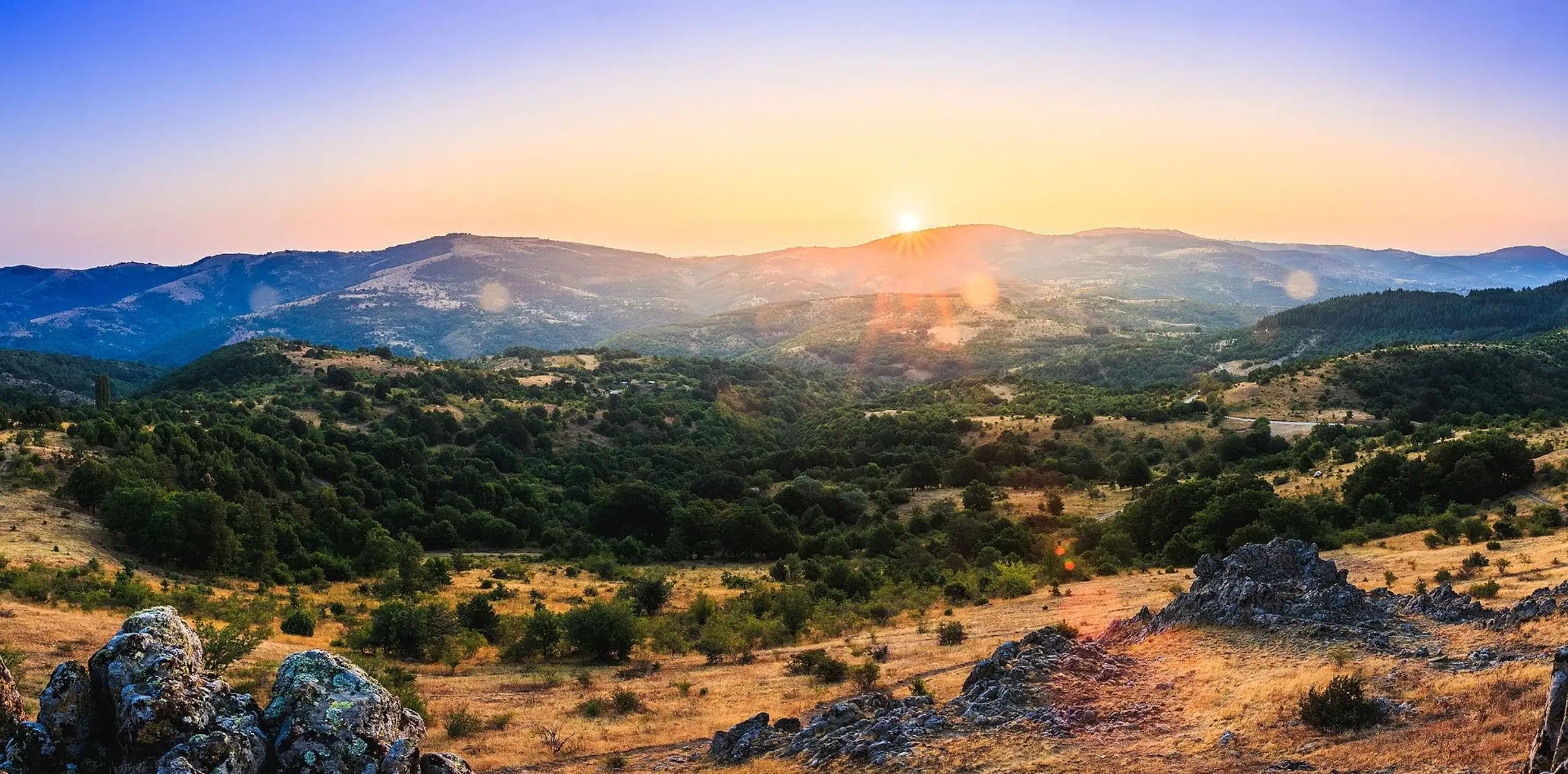
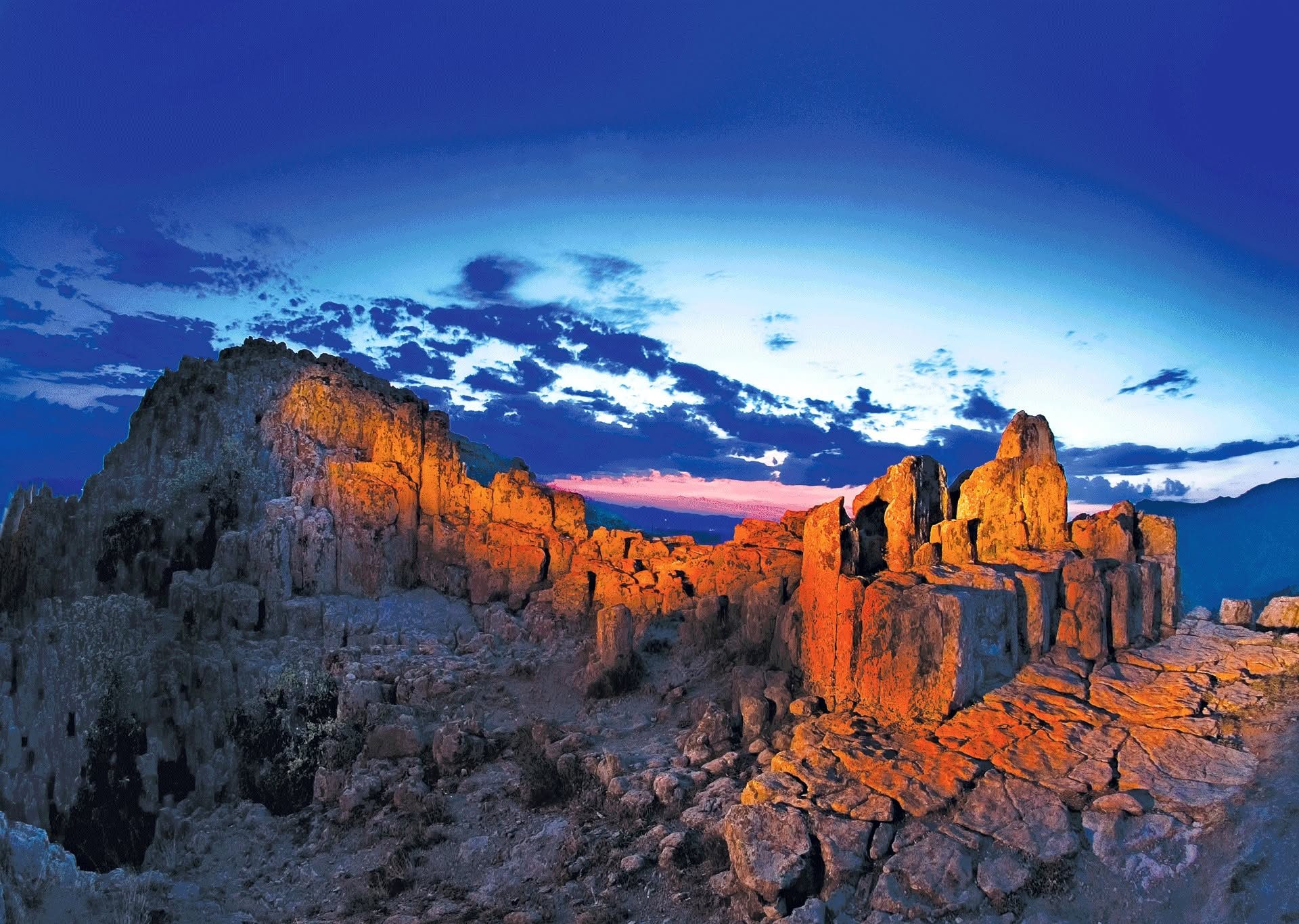
Kokino sits on the summit of Tatichev Kamen, a neovolcanic hill 1,030 metres above sea level in the municipality of Staro Nagorichane — about 30 km from Kumanovo and roughly two hours from Skopje.
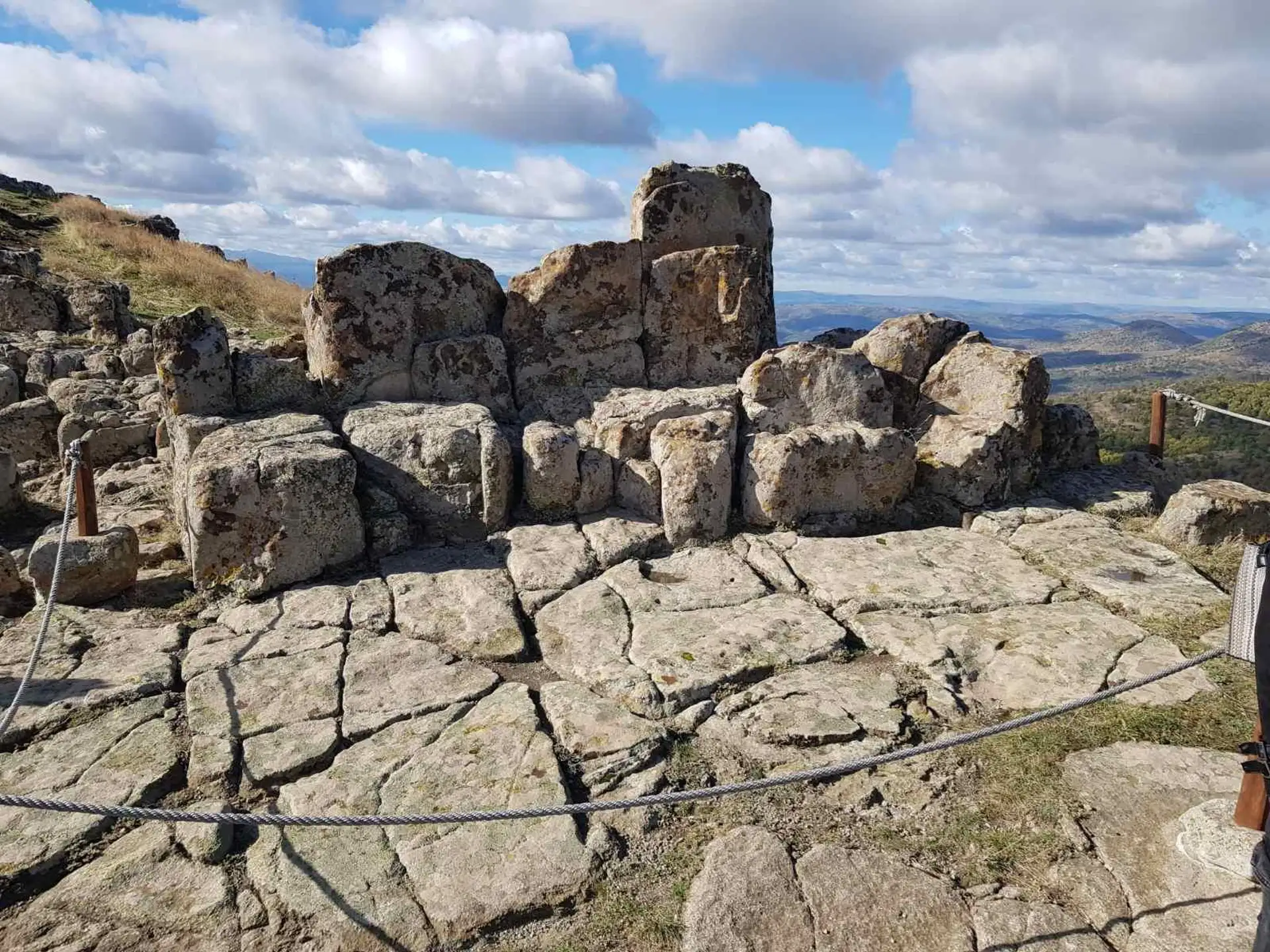
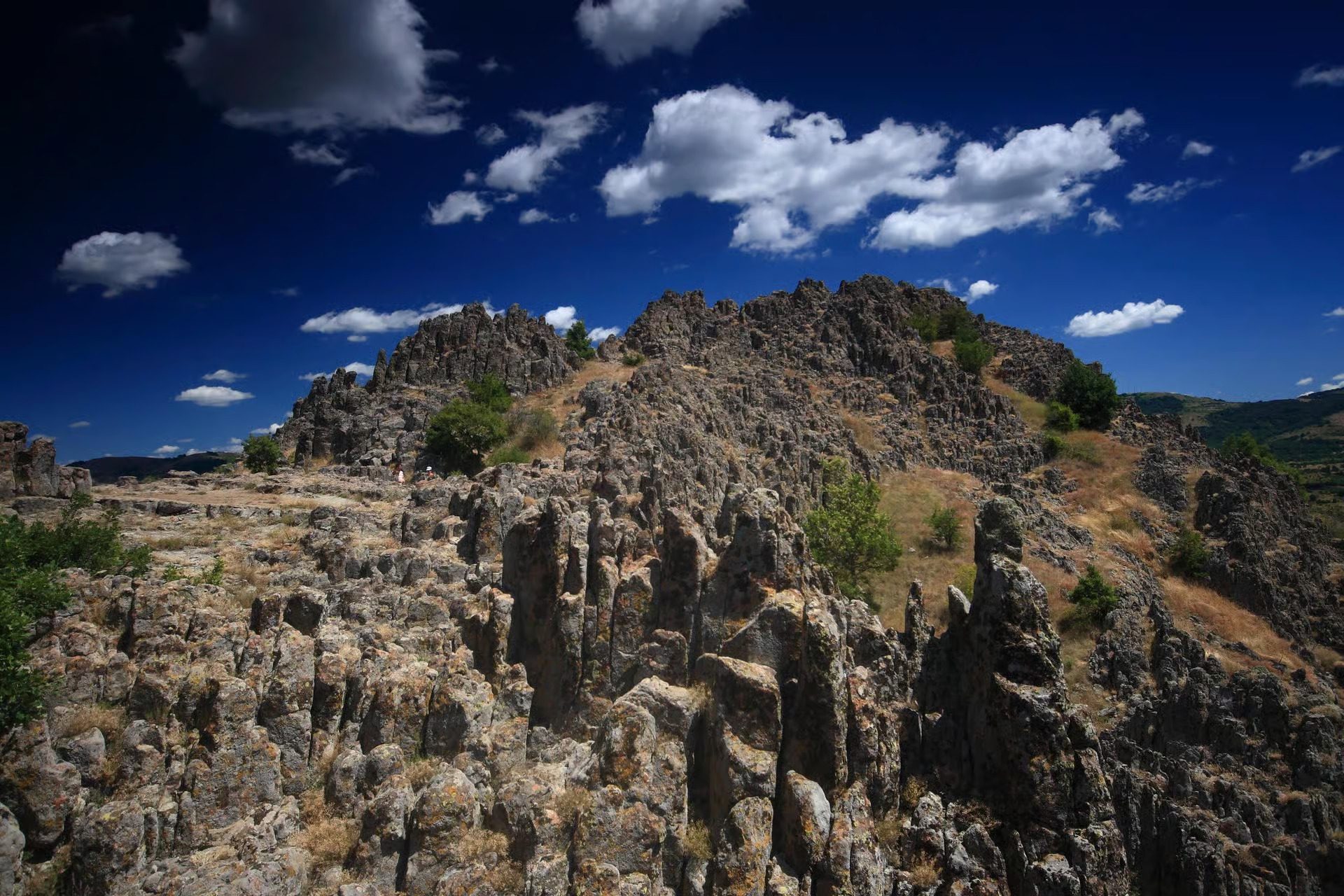
The rock here was formed by cooling lava. Time and erosion split it into fissures and ledges, and Bronze Age observers turned those natural features into instruments: platforms to stand on, thrones to sit on, and stone markers that frame exactly where the sun and moon break the eastern horizon on particular days of the year.
It was both a mountain sanctuary and a working calendar — a place to measure time and to give thanks for it.
Free · No app required
The audio guide is back
Kokino's original audio guide was an app that quietly disappeared when the old site went offline. The recordings survived — so we put them back on the web, where any phone can play them.
Seven stops, about eleven minutes in total, walking you from the foot of the hill up through the ritual pits to Platforms D, A and C. Start it in the car park and let it lead.
- 1Welcome to KokinoWhere you are standing1:01
- 2The Four PlatformsA, B, C and D explained2:42
- 3Ritual Pits & Stone CirclesWhat was buried here, and why2:59
- 4Go to Platform DEquinoxes and the star Aldebaran1:00
- 5Go to Platform AThe thrones and the ritual marker1:19
- 6Go to Platform CSolstices, equinoxes and the moon1:16
- 7Before You LeaveA closing thought0:12
Go deeper
Four ways to understand this place
Kokino rewards a little reading before you climb. Each of these takes about five minutes.
The Site & Its Markers
How the four platforms relate to each other, and what each of the seven markers was built to catch.
ExploreAstronomy
The 19-year lunar calendar, the solstice and equinox markers, and how a prehistoric community tracked them.
ExploreArchaeology
Around 100 ritual pits, circular stone constructions, votive figurines and moulds for casting bronze.
ExploreRituals & Myths
The Great Mother Goddess, the Sun as her son, and the peoples who later held this land.
ExploreChronology
Four thousand years, briefly
Dates come from the excavations led by the National Museum in Kumanovo, which has worked the site since 2001, and from the astronomical study of the markers themselves.
The northern platform is cut
Platform D is shaped on the north slope. At this date the star Aldebaran sits at the equinox point, and the platform's marker catches it.
The western platform follows
Platform C is made, and with it the main series of solar and lunar markers on the eastern horizon.
The calendar in use
Full-moon risings are tracked across a 19-year cycle. Most of the pottery and ritual deposits date from this period.
The sanctuary closes
Use as a holy place ends. An Iron Age settlement appears on the southern slope — though the sky-watching may have carried on.
Rediscovery
Systematic excavation and archaeoastronomical survey begin, and Kokino enters the literature as one of Europe's best-preserved Bronze Age observatories.
You will often read that NASA ranked Kokino the fourth-oldest observatory in the world. The truth is smaller but real: in 2005 NASA's Sun-Earth Connection Education Forum included Kokino in an educational listing of ancient observatories, Ancient Observatories: Timeless Knowledge. There was never an official ranking. Kokino doesn't need one — the markers speak for themselves.
Getting here
It is easier to reach than it looks
By car
From Kumanovo via Staro Nagorichane and Dragomance, then a narrow asphalt road to the foot of the hill. Park by the roadside; the climb takes about 15 minutes.
How long to allow
Around 1.5 to 2 hours on site, plus the walk up. A warden is present from 9:00 to 17:00 and can point you to the markers.
Guided visits
The site is managed by the National Museum in Kumanovo, which provides expert guides for groups that book ahead.
Day trip from Skopje
Let us drive you there
Roughly two hours each way, with up to three hours on the hill — and, if you like, a traditional Macedonian lunch at Etno Selo Timchevski in the village of Vojnik on the way back.